
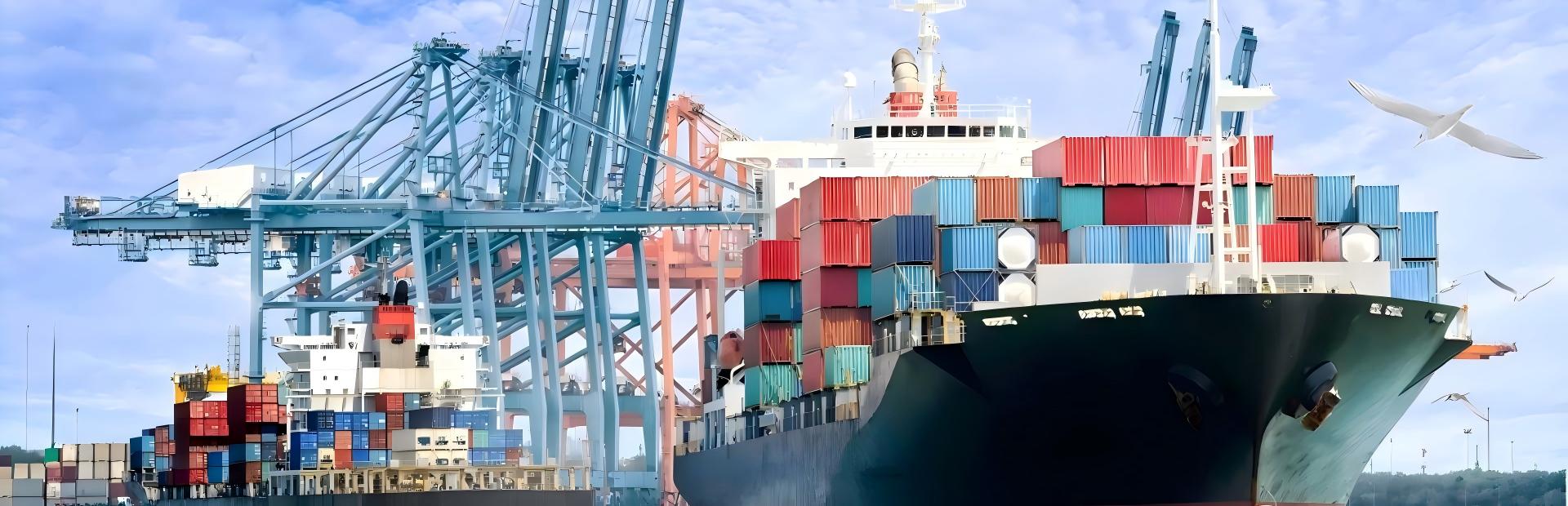
China to Germany ddp shipping allows the seller to arrange transportation, import customs clearance, applicable duties and taxes, and delivery to the agreed destination, providing buyers with a more integrated logistics solution.
DDP stands for Delivered Duty Paid, one of the Incoterms® rules published by the International Chamber of Commerce (ICC). Under DDP Incoterms® 2020, the seller is responsible for arranging delivery to the named destination, clearing the goods for import, and paying applicable import duties and taxes.
For businesses importing from China into Germany, DDP shipping can simplify coordination between Chinese suppliers, international carriers, customs representatives, and German delivery providers.
A typical DDP shipping service may include:
Pickup from the Chinese factory or supplier
Export customs clearance in China
International sea freight or air freight
Import customs clearance in Germany
Applicable customs duty and import VAT arrangements
Final delivery to the agreed German address
The precise services included in a freight forwarder's quotation should always be confirmed in writing. DDP defines the seller's contractual responsibilities; it does not automatically guarantee that every possible charge, inspection, or exceptional service is included in a particular logistics quotation.
Official reference: ICC Incoterms® Rules.
The process generally involves six stages, from supplier pickup in China to final delivery in Germany.
The process begins with the importer providing shipment information to the supplier or freight forwarder.
Important details include:
Product name and description
Quantity and declared value
Package dimensions and gross weight
Product materials and intended use
Pickup address in China
Final delivery address in Germany
Required delivery schedule
These details help determine the appropriate transportation method, freight quotation, customs classification, and any product-specific compliance requirements.
For commercial shipments, providing accurate product information before cargo pickup helps reduce the risk of revised quotations and customs delays.
After the shipping plan is confirmed, the freight forwarder coordinates cargo collection from the supplier or factory.
The export preparation stage may include:
Confirming cargo quantity and packaging
Checking shipping marks and package details
Collecting the commercial invoice and packing list
Preparing export documentation
Arranging export customs procedures
If goods come from multiple Chinese suppliers, cargo consolidation may be available, depending on the route and shipment arrangement.
Accurate export documents are important because the information may also be used for German import customs clearance.
The transportation method depends on shipment volume, delivery urgency, product characteristics, and budget.
Sea Freight
Sea freight is commonly suitable for:
Large commercial orders
Machinery and industrial equipment
Furniture and bulky products
Wholesale inventory
Full Container Load (FCL) shipments
Less than Container Load (LCL) shipments
Sea freight generally offers lower transportation costs per unit for larger cargo volumes, although port handling, consolidation, and inland delivery charges must also be considered.
Air Freight
Air freight is more suitable for:
Urgent orders
Samples and product testing
High-value goods
Time-sensitive components
Emergency inventory replenishment
Air freight usually costs more per unit of chargeable weight but provides faster transportation.
The most suitable option depends on the total logistics cost and required delivery date, rather than the international freight rate alone.
Import customs clearance is a critical stage of China-to-Germany DDP shipping.
The customs declaration must contain accurate information about the imported products, their customs value, commodity codes, and origin.
Common supporting documents include:
Commercial invoice
Packing list
Bill of lading or air waybill
Commodity code information
Product certificates or permits when required
Importers should also confirm the applicable EU and German product regulations before dispatch.
Germany follows the EU customs framework. Goods generally need to satisfy the relevant customs and regulatory requirements before they can be released for free circulation in the EU.
Official reference: European Commission — Importation Procedures.
Under DDP Incoterms® 2020, the seller is responsible for applicable import duties and taxes.
The amount payable depends on the product classification, customs value, applicable duty rate, and relevant tax rules.
Import-related costs may include:
Customs duty
Import VAT
Customs clearance service fees
Port or terminal handling charges
Other agreed logistics expenses
The freight forwarder may coordinate customs declarations and payment arrangements, but the party acting as importer and the legal basis for the customs and VAT arrangements must be confirmed in advance.
A DDP quotation should explain how these costs are handled and identify any exclusions.
After customs clearance and cargo release, the goods are transported to the agreed delivery location.
Typical destinations include:
Company warehouses
Distribution centers
Retail facilities
Commercial premises
Other agreed business addresses
The DDP delivery point should be specified precisely in the sales contract or shipping agreement.
Under DDP, goods are delivered on the arriving means of transport, ready for unloading at the named destination. Unloading is generally the buyer's responsibility unless the applicable transport contract or separate agreement assigns that cost to the seller.
Transit time depends on the transportation method, origin and destination locations, customs procedures, and final delivery arrangements.
The following are indicative planning estimates rather than guaranteed delivery times.
| Shipping Method | Indicative Door-To-Door Time | Suitable For |
|---|---|---|
| Sea Freight DDP | Around 30–50 days | Large and cost-sensitive shipments |
| Air Freight DDP | Around 5–12 days | Urgent and time-sensitive cargo |
Actual transit times can vary because of:
Factory readiness
Vessel or flight schedules
Port congestion
Customs inspections
Product compliance checks
Destination delivery arrangements
Importers should obtain a shipment-specific estimate before booking, especially when goods are needed for a product launch, production deadline, or warehouse replenishment.
The required documents depend on the product, customs procedure, and transport method.
The invoice should identify the seller, buyer, products, quantities, transaction values, and relevant sales terms.
Product descriptions should be sufficiently detailed to support accurate customs classification.
The packing list provides package counts, weights, dimensions, and other cargo information. These details should match the actual shipment.
Sea freight normally uses a bill of lading, while air freight uses an air waybill.
An Economic Operators Registration and Identification (EORI) number is generally required for economic operators involved in EU customs activities. The relevant importer and customs representative arrangements should be checked before shipment.
Depending on the product, additional documents may include conformity documentation, licences, safety information, or other certificates.
A freight forwarder can coordinate document preparation, but importers and sellers should confirm that the information is accurate and that the required documents are available before departure.
Two important import cost categories are customs duty and import VAT.
The applicable customs duty depends on factors such as:
EU commodity code classification
Customs value
Country of origin
Applicable trade measures
Certain products originating in China may be subject to additional measures, such as anti-dumping or countervailing duties.
Importers should verify current rates and measures using the official EU TARIC database.
Germany generally applies a standard import VAT rate of 19%, while a reduced rate of 7% applies to certain eligible goods.
The applicable rate and taxable import value depend on the product and relevant tax rules. Import VAT may include the customs value, applicable duties, and qualifying incidental expenses in its calculation base.
Under DDP, the seller is contractually responsible for applicable import taxes. However, the actual importer, customs declarant, and VAT arrangements must be legally appropriate for the transaction.
Official reference: European Commission — VAT Taxable Amount.
The main difference is who handles import clearance and pays the applicable import duties and taxes.
| Responsibility | DDP | DAP |
|---|---|---|
| Export clearance in China | Seller | Seller |
| International transportation | Seller | Seller |
| Import customs clearance | Seller | Buyer |
| Import duties and taxes | Seller | Buyer |
| Delivery to named destination | Seller | Seller |
| Unloading at destination | Generally buyer, subject to the transport agreement | Generally buyer, subject to the transport agreement |
DDP may be preferable for buyers seeking a more integrated shipping arrangement.
DAP may suit experienced importers who have their own customs representatives and established import processes.
The choice should be based on the parties' capabilities, the legal requirements for importation, and the total cost of each arrangement.
No. DDP shipping does not remove product restrictions or compliance obligations.
Different product categories may require additional preparation.
| Product Category | Important Considerations |
|---|---|
| Electronics | Applicable safety and conformity requirements |
| Machinery | Machinery safety and relevant EU compliance obligations |
| Toys | Toy safety and chemical restrictions |
| Chemicals | REACH, CLP, and other applicable controls |
| Batteries | Battery regulations and transport requirements |
| Food products | Food safety and applicable sanitary requirements |
| Medical devices | Relevant EU medical device rules and authorisations |
The exact requirements depend on the product's characteristics and intended use.
Before shipping, importers should verify whether the goods can legally enter the EU market and whether the proposed DDP arrangement can satisfy the relevant customs and tax requirements.
DDP shipping can offer several operational advantages when the service is correctly arranged.
The seller coordinates transportation and import clearance instead of requiring the buyer to arrange every stage independently.
A detailed DDP quotation can help importers estimate the total delivery cost before cargo departure.
Buyers may spend less time coordinating separate freight, customs, and delivery providers.
The shipment is arranged to reach the agreed German destination after the applicable import procedures have been completed.
These benefits depend on the quality of the logistics arrangement and the clarity of the agreed service scope.
Before confirming an order, importers should review the following checklist:
Confirm that the product can legally be imported into Germany.
Verify the commodity code and applicable customs duty.
Check import VAT and any additional trade measures.
Confirm the proposed importer and customs representation arrangements.
Check whether required EORI and tax information is available.
Obtain a clear breakdown of the DDP quotation.
Confirm whether customs clearance and final delivery are included.
Identify potential additional charges for inspections, storage, or special handling.
Confirm the named destination and unloading arrangements.
Agree on an estimated delivery schedule and shipment update process.
Completing these checks before cargo pickup helps reduce unexpected costs and avoidable customs problems.
A professional freight forwarder can coordinate the logistics stages between Chinese suppliers and German destinations.
Services may include:
Factory pickup and cargo consolidation
Export documentation coordination
Sea freight and air freight booking
Import customs clearance coordination
Duty and tax payment arrangements
Destination transportation
Door-to-door delivery
Importers should confirm which services are performed directly and which are provided through overseas partners.
A reliable provider should explain the shipment process, cost inclusions, customs responsibilities, and possible exceptions before the cargo leaves China.
Our team provides international logistics solutions including sea freight, air freight, cargo consolidation, customs clearance coordination, and door-to-door delivery. Shipping arrangements can be tailored to your product type, cargo volume, delivery deadline, and German destination.
Contact us to discuss your China-to-Germany shipping requirements and receive a suitable logistics plan.