
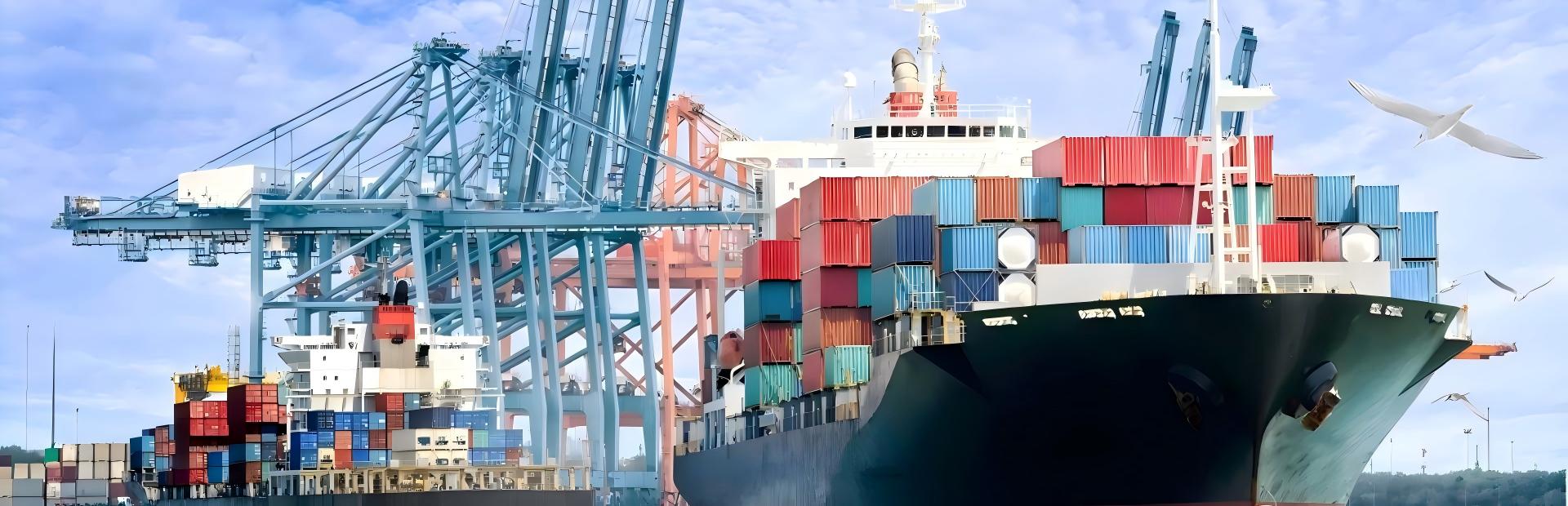
The best China-to-Spain shipping solution depends on cargo volume, delivery deadlines, budget, and customs requirements. Sea freight suits many large orders, air freight supports urgent shipments, and railway or express services may fit specific cargo and delivery needs.
Businesses importing goods from China to Spain can choose from several international transportation methods. Each option offers different advantages in cost, transit time, cargo capacity, and handling requirements.
The main shipping solutions include:
Sea freight: Suitable for large commercial orders, heavy cargo, and cost-sensitive shipments.
Air freight: Appropriate for urgent goods, valuable products, and time-sensitive inventory.
Railway shipping: An alternative for eligible cargo moving along available China-Europe rail corridors.
Express shipping: Convenient for small parcels, samples, documents, and urgent deliveries.
Door-to-door shipping: A coordinated service that can combine pickup, international transportation, customs arrangements, and final delivery.
For importers, the most suitable method is not necessarily the one with the lowest freight rate or shortest international transit time. The decision should account for the complete journey from the Chinese supplier to the final delivery address in Spain.
The best method depends on the shipment's size, urgency, and commercial purpose.
| Shipping Method | Best Suited For | Main Advantage | Main Consideration |
|---|---|---|---|
| Sea Freight | Large orders, furniture, machinery, bulk inventory | Often cost-effective for large volumes | Longer transit and port handling |
| Air Freight | Urgent components and time-sensitive goods | Faster international transportation | Higher freight cost |
| Railway Shipping | Eligible commercial cargo on available routes | May balance cost and transit time | Route and terminal availability |
| Express Shipping | Samples, documents, and small parcels | Convenient integrated delivery | Can be expensive as weight increases |
| Door-to-Door Shipping | Businesses seeking coordinated logistics | Simplifies shipment management | Service inclusions must be verified |
Transit times vary by route, service schedule, cargo handling, customs clearance, and destination delivery arrangements. Importers should request a door-to-door estimate rather than relying solely on port-to-port or terminal-to-terminal transit times.
Sea freight is often the preferred option for businesses importing large quantities of goods from China to Spain.
It is commonly used for:
Furniture and home products
Industrial machinery
Household goods
Construction materials
Wholesale consumer products
Regular inventory replenishment
Sea freight generally offers competitive transportation costs for larger shipments, especially when the cargo can efficiently use container capacity.
Full Container Load (FCL) means a shipment uses a dedicated container. It is often suitable for large orders or cargo that justifies booking a full container.
Less Than Container Load (LCL) means a shipment shares container space with cargo from other shippers. It can be suitable for smaller orders that do not justify a dedicated container.
| Factor | FCL | LCL |
|---|---|---|
| Container use | Dedicated to one shipment | Shared with other shipments |
| Suitable cargo | Larger commercial orders | Smaller shipments |
| Cost structure | Generally quoted per container | Commonly based on chargeable volume or weight |
| Handling | Fewer consolidation-related steps | Requires consolidation and deconsolidation |
| Planning | Suitable for planned bulk orders | Useful for smaller or mixed supplier orders |
FCL is not automatically cheaper for every shipment. Importers should compare the complete FCL and LCL quotations, including origin handling, destination charges, and final delivery.
Air freight is suitable when delivery speed is more important than achieving the lowest transportation cost.
Common applications include:
Urgent production components
Product samples for approval
High-value commercial goods
Time-sensitive inventory
Replacement parts needed to avoid production delays
Air freight can help businesses replenish stock more quickly than many sea freight services, but the actual delivery time depends on flight schedules, cargo acceptance, customs procedures, and local delivery.
Air freight commonly uses chargeable weight, which is generally based on whichever is greater: actual gross weight or volumetric weight.
A commonly used volumetric calculation is:
Volumetric Weight (kg) = Length × Width × Height (cm) ÷ Divisor
The divisor varies by carrier and service.
For example, a carton measuring 60 × 40 × 35 cm has a volume of 84,000 cubic centimetres. Using an illustrative divisor of 6,000, its volumetric weight would be 14 kg.
If the actual gross weight is 10 kg, the shipment may be charged based on the higher volumetric weight, subject to the carrier's applicable rules.
Importers should confirm the divisor, rounding method, minimum chargeable weight, and any additional handling charges before booking.
Railway shipping may be suitable for businesses seeking an alternative to sea and air freight on available China-Europe routes.
It can provide a balance between transportation cost and transit time for eligible commercial cargo.
Potential applications include:
Industrial components
Manufactured products
Selected consumer goods
Commercial inventory requiring earlier arrival than a typical sea freight schedule
However, rail services depend on available corridors, terminal arrangements, border procedures, and onward transportation within Europe.
Not every destination in Spain has direct rail freight access from China. Cargo may require additional terminal transfers or inland transportation.
Before choosing rail freight, importers should confirm the actual route, transfer arrangements, expected door-to-door transit time, and complete cost.
Door-to-door shipping coordinates the movement of cargo from a Chinese supplier's premises to an agreed delivery address in Spain.
Depending on the quotation, the service may include:
Factory pickup in China
Origin warehouse handling and consolidation
Export customs clearance coordination
International transportation
Arrival handling in Spain or another agreed EU entry point
Import customs clearance coordination
Final delivery to a warehouse, factory, or business address
Door-to-door service can simplify communication by allowing one logistics provider to coordinate multiple stages.
However, the term does not automatically mean that every charge is included. Importers should confirm whether customs clearance, duties, VAT, unloading, delivery appointments, and other destination services are covered.
The required documents depend on the product, transportation method, and customs procedure.
Common documents include:
Commercial invoice
Packing list, where applicable
Bill of lading or air waybill
Correct commodity code information
Customs valuation details
Country-of-origin information
EORI details where required
Product-specific certificates, licences, or permits where applicable
The commercial invoice, packing list, and transport documents should contain consistent product descriptions, quantities, weights, and shipment information.
Incorrect commodity codes, incomplete invoices, or unsupported customs values can cause additional checks and delays.
Importers should also verify whether their products require specific conformity documentation, safety information, labelling, or other regulatory evidence before shipment.
Preparing documents before cargo departure gives the importer and customs representative more time to identify and resolve problems.
Spain follows the EU's common customs framework for goods imported from non-EU countries, including China.
Importers generally need to ensure that:
The goods are correctly classified.
Customs value and origin are accurately declared.
The applicable customs declaration is submitted.
Relevant duties and import VAT are addressed.
Product-specific import restrictions are satisfied.
Required certificates or permits are available.
An Economic Operators Registration and Identification (EORI) number is generally required for businesses undertaking customs activities covered by EU customs rules.
Importers should confirm which company will act as the importer, who will submit the customs declaration, and whether the necessary EORI registration is in place.
Customs duties depend on the commodity code, customs value, origin, and applicable trade measures.
Import VAT is generally payable under the applicable Spanish VAT rules, subject to relevant exemptions or special procedures. Spain's standard VAT rate is generally 21%, although reduced rates may apply to eligible products.
The correct treatment depends on the goods and transaction. Importers should check the applicable tariff and tax requirements before shipping rather than relying on a general estimate.
DDP and DAP allocate different responsibilities between the seller and buyer under the agreed Incoterms rules. They do not override Spanish or EU customs and tax requirements.
Under DDP Incoterms® 2020, the seller is responsible for arranging delivery to the named destination and handling import clearance, applicable duties, and taxes.
Before accepting DDP, both parties should confirm that the proposed importer and tax arrangements are legally workable in Spain.
Under DAP, the seller arranges delivery to the agreed destination, while the buyer generally handles import clearance and applicable duties and taxes.
DAP may suit importers that have their own customs arrangements or work with an established customs representative.
For both terms, confirm the named destination, included services, and responsibility for customs declarations, duties, and VAT in writing.
Shipping costs can be reduced by selecting a suitable transportation method, optimising packaging, and comparing complete quotations.
Use sea freight for suitable large shipments and consider air freight when faster replenishment justifies the additional cost.
Request both options when cargo volume makes either method potentially suitable. Include origin and destination charges in the comparison.
Reduce unnecessary packaging volume without compromising product protection. This can improve container utilisation and reduce volumetric charges for applicable services.
When timing permits, compatible cargo from multiple suppliers may be consolidated into one shipment.
Check international freight, handling, customs services, taxes, inland delivery, storage, and possible additional charges.
Advance planning can reduce the need for urgent transportation and help businesses coordinate shipments with production and inventory schedules.
The objective is to minimise total landed logistics cost rather than simply selecting the lowest quoted freight rate.
A reliable freight forwarder should provide suitable transportation options, transparent pricing, clear communication, and effective coordination across the complete shipment.
Before booking, assess the following factors.
Confirm experience with China-to-Spain shipments and the selected transportation method.
Ask who handles export and import customs procedures and which documents must be supplied.
Verify whether the provider can arrange delivery to the actual warehouse, factory, or business address in Spain.
Request a written quotation identifying included services, excluded charges, and possible additional fees.
Confirm how shipment milestones, delays, and unexpected issues will be communicated.
Ask how the provider handles missed departures, customs holds, and changes to delivery arrangements.
For regular imports, reviewing actual delivery performance and cost records can help businesses determine whether the logistics arrangement remains suitable over time.
Importers can avoid unnecessary costs and delays by addressing common problems before cargo departs.
Choosing solely by price: A low freight rate may exclude destination charges or customs services.
Underestimating door-to-door transit time: International transit is only one stage of the complete delivery process.
Providing inaccurate cargo details: Incorrect dimensions, weights, and product descriptions can cause revised charges or customs queries.
Ignoring product compliance: Some goods require additional documentation or regulatory checks before they can be sold in Spain.
Leaving customs arrangements until arrival: Missing documents or unclear importer responsibilities can delay release.
Assuming DDP covers every possible obligation: Import arrangements must be legally workable, and the exact service scope should be confirmed.
A structured shipping plan can help importers manage these risks and coordinate suppliers, freight providers, and customs representatives more effectively.
Our team provides international logistics solutions including sea freight, air freight, railway shipping, FCL and LCL, cargo consolidation, customs clearance coordination, and door-to-door delivery.
Shipping arrangements can be tailored to cargo type, shipment volume, supplier location, delivery deadlines, and destination requirements.
Contact us to discuss your China-to-Spain shipment and receive a logistics plan suited to your business.