
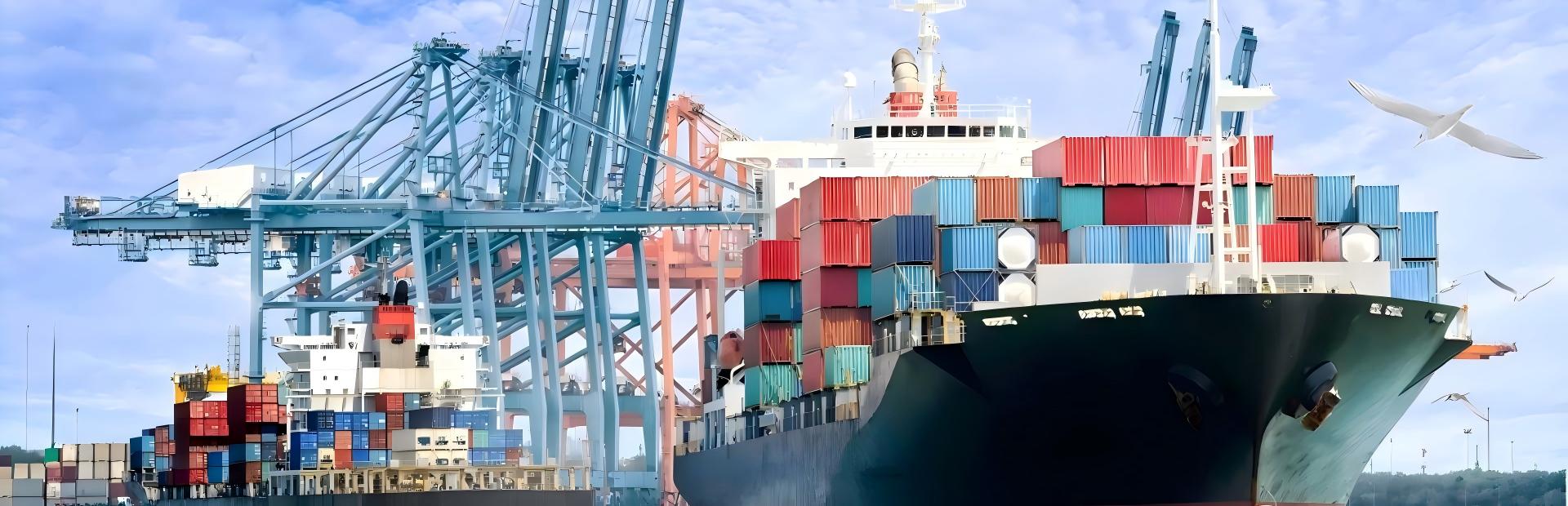
European freight forwarders coordinate VAT-related shipping procedures by arranging customs clearance, collecting shipment information, and clarifying tax payment responsibilities. The importer, seller, or another legally designated party remains responsible for VAT obligations according to the transaction and applicable national rules.
A freight forwarder helps coordinate the transportation and customs processes associated with goods entering or moving within Europe. Its VAT-related responsibilities depend on the agreed service, the import arrangement, and whether it acts as a customs representative or performs another authorised role.
For shipments from China to Europe, a freight forwarder may help with:
Coordinating import customs declarations
Collecting commercial invoices and packing lists
Providing shipment values and freight information needed for customs calculations
Arranging payment of import charges under the agreed service
Coordinating customs representatives and destination delivery
Providing available customs and transport records to the relevant parties
However, a freight forwarder does not automatically become responsible for every VAT obligation simply because it arranges shipping or customs clearance.
The party legally liable for import VAT depends on the applicable national rules and the circumstances of the import. EU VAT rules generally designate the person liable under the law of the country where the import takes place.
For importers, the key question is not simply whether the forwarder offers VAT-inclusive shipping. It is whether the customs, payment, and documentation arrangements are legally workable and clearly defined.
Official reference: European Commission — Persons Liable For VAT.
Import VAT is generally calculated using a taxable base established under the applicable VAT rules. This commonly includes the customs value, applicable customs duties, and certain incidental expenses.
The precise calculation depends on the destination country, product category, customs procedure, and applicable tax rules.
A simplified example illustrates the process:
| Cost Component | Illustrative Amount |
|---|---|
| Customs value, including relevant costs | €10,000 |
| Customs duty at an illustrative 5% | €500 |
| Other expenses included in the VAT base | €200 |
| Illustrative VAT taxable base | €10,700 |
| VAT at an illustrative 20% | €2,140 |
In this example, import VAT would be €2,140 if the stated amounts and assumptions correctly reflect the applicable rules.
The 5% customs duty and 20% VAT rate are illustrative figures, not a quotation or the actual rates for a particular product or European destination.
Depending on the applicable rules, the VAT taxable base may include:
Customs value of the goods
Customs duties and certain other import charges
Freight and insurance costs where required
Certain incidental expenses, such as qualifying delivery costs to the relevant destination
Importers should confirm which charges must be included rather than applying a single calculation to every shipment.
No. Freight forwarders do not determine the statutory VAT rate.
EU member states set their own VAT rates within the EU framework, and reduced rates may apply to eligible products. The applicable rate depends on the destination country and the goods involved.
Official reference: European Commission — VAT Rates.
Import VAT and VAT charged on freight forwarding services are different tax matters.
Import VAT relates to the importation of goods into a country. It is generally assessed through the applicable import procedure.
VAT on freight forwarding services relates to the transport, handling, brokerage, or other services supplied by a logistics provider. The VAT treatment depends on the customer, place-of-supply rules, type of service, and applicable exemptions or special provisions.
A freight invoice may therefore contain charges that are treated differently for VAT purposes.
Importers should ask the provider to distinguish between:
International freight charges
Customs clearance service fees
Destination handling charges
Import duties
Import VAT
VAT charged on the provider's own services, where applicable
A quotation labelled “VAT included” should clearly explain which tax and service components are covered.
Delivered Duty Paid (DDP) is an Incoterms rule under which the seller is responsible for arranging delivery to the named destination and handling import clearance, applicable duties, and taxes.
For a shipment from China to Europe, the freight forwarder may coordinate the transport and customs procedures needed to fulfil the seller's DDP obligations.
A typical arrangement may include:
Collecting cargo from the Chinese supplier.
Coordinating export customs clearance.
Arranging international transportation.
Coordinating import customs clearance through the appropriate representative.
Arranging settlement of applicable duties and taxes under the agreed service.
Delivering the goods to the named destination.
No. DDP allocates contractual responsibilities between the seller and buyer, but it does not override tax legislation.
Before accepting a DDP quotation, businesses should confirm:
Which entity will act as the importer
Whether the proposed customs arrangements are legally workable
Who is responsible for applicable import VAT
Whether VAT registration is required
How the import transaction will be documented
Whether any VAT recovery is available to the relevant business
A freight forwarder can coordinate the process, but it cannot make an otherwise non-compliant tax arrangement valid simply by offering a VAT-inclusive price.
A clear quotation should identify the destination, transportation method, included logistics services, customs arrangements, and responsibility for applicable duties and taxes.
It should also explain how exceptional charges, inspections, storage, or other unplanned costs will be handled.
For B2B importers, written confirmation of the importer and VAT arrangements is more valuable than relying on a general promise of “tax included.”
Under Delivered At Place (DAP), the seller arranges delivery to the named destination, while the buyer generally handles import clearance and applicable duties and taxes.
A freight forwarder may coordinate transportation to the destination and provide the documents needed for customs clearance. The buyer or its appointed customs representative then manages the import procedures according to the agreed arrangement.
DAP can suit businesses that already have:
A valid EORI number where required
An established customs representative
Internal import documentation procedures
VAT accounting arrangements
Experience managing destination charges
Compared with DDP, DAP generally gives the buyer more direct involvement in import clearance and tax settlement.
However, DAP does not necessarily mean the buyer manages all transportation. The seller remains responsible for arranging delivery to the named destination under the agreed rule.
The EU provides a common VAT framework, but member states determine their own VAT rates and apply national rules within that framework.
The standard VAT rate is not identical across Europe. Reduced rates may also apply to eligible goods, and certain administrative requirements vary by country.
| Destination | Illustrative Standard VAT Rate |
|---|---|
| Germany | 19% |
| France | 20% |
| Italy | 22% |
| Spain | 21% |
| Netherlands | 21% |
| Poland | 23% |
These are general standard rates and should be checked against current official guidance before being used for a transaction. Reduced rates, special territories, exemptions, and product-specific rules may change the applicable treatment.
The destination and import arrangements affect the applicable VAT treatment, customs procedure, and administrative requirements.
For example, a shipment entering the EU through one member state and then moving to another may involve different arrangements depending on whether the goods are released for free circulation at entry or remain under a customs procedure.
Importers should not assume that the country where cargo first arrives is always the country in which the final VAT treatment is determined.
Official reference: European Commission — Country-Specific VAT Information.
A VAT number and an EORI number serve different purposes.
A VAT number identifies a business for VAT purposes where registration is required.
An EORI number identifies an economic operator for customs activities covered by EU rules.
Depending on the transaction, a business may need one or both. Having one does not automatically satisfy the requirements for the other.
Before shipping, importers should confirm:
Which entity will act as the importer
Whether an EORI number is required and available
Whether VAT registration is required
Whether a customs representative has been appointed
Which entity will report or pay the relevant VAT
Whether the transaction supports any intended VAT deduction or recovery
Non-EU businesses importing into Europe should confirm their arrangements with the relevant national tax authority or a qualified tax adviser.
VAT-registered businesses may be able to deduct eligible import VAT when goods are imported for qualifying taxable business activities, subject to the applicable national rules and documentation requirements.
Recovery is not automatic.
Businesses should confirm that:
The import is properly documented
The relevant entity has the appropriate VAT status
The customs records support the claim
The goods are used for activities that qualify for deduction
Any national reporting requirements are met
A freight forwarder's invoice or proof that a shipment was delivered may not, by itself, be sufficient evidence for every VAT recovery claim.
Importers should retain the customs declaration, relevant import records, invoices, and other supporting documents required by the applicable rules.
E-commerce imports can involve different VAT collection arrangements depending on the transaction, consignment value, sales channel, and role of the seller or marketplace.
The Import One Stop Shop (IOSS) is an optional scheme designed to simplify VAT declaration and payment for eligible distance sales of imported goods in consignments with an intrinsic value not exceeding €150, subject to the scheme's conditions.
Where IOSS applies, VAT can generally be collected at the point of sale and reported through the scheme rather than collected from the customer on delivery under the usual import VAT process.
IOSS is not a general VAT solution for all commercial freight shipments. Eligibility and responsibilities must be checked for the particular sale.
For wholesale orders, pallet shipments, and regular B2B imports, businesses should not assume that IOSS applies.
Official reference: European Commission — Import One Stop Shop.
The documents required depend on the shipment and customs arrangement. Freight forwarders commonly coordinate transport records and provide shipment information needed by the customs representative.
Relevant records may include:
Commercial invoice
Packing list
Bill of lading or air waybill
Customs declaration and release information
Freight and insurance invoices
Evidence of applicable import charges
Import VAT records available through the relevant customs process
Service invoices issued by the freight forwarder
Importers should confirm which records the provider will supply and which documents must be obtained from the customs representative or tax authority.
The information should be consistent across the commercial transaction, transport records, and customs declaration.
VAT-related problems often arise when commercial, customs, and tax responsibilities are not clearly defined.
DDP defines contractual responsibilities, but the proposed import and tax arrangements must still comply with applicable law.
Import VAT on goods and VAT charged on logistics services are different items and may receive different tax treatment.
The entity named in customs records can affect tax reporting and any potential recovery of import VAT.
EU countries apply different standard and reduced VAT rates. The correct rate depends on the destination and product.
Incomplete documentation can make it harder to support accounting entries, tax reporting, or VAT recovery.
Two quotations may appear similar while treating duties, import VAT, customs service fees, and destination handling differently.
A clear written allocation of responsibilities before shipment can help prevent many of these problems.
Use this checklist before confirming a freight forwarding service.
Confirm the destination country and named delivery address.
Identify the entity acting as the importer.
Confirm whether EORI and VAT registration are required.
Clarify whether DDP, DAP, or another arrangement will apply.
Identify who submits the import customs declaration.
Confirm who pays applicable import VAT and customs duties.
Check whether VAT is included in the quotation or billed separately.
Confirm what customs and tax documents will be provided.
Check whether the business may be eligible to recover import VAT.
Seek qualified tax advice for complex or cross-border arrangements.
The objective is to ensure that logistics responsibilities, customs declarations, tax payments, and supporting records are aligned before cargo departs.
A freight forwarder can help coordinate transportation, customs clearance, and the shipment information needed by the relevant parties.
Depending on the agreed service, this may include sea freight, air freight, railway shipping, cargo consolidation, customs clearance coordination, and door-to-door delivery.
For B2B importers, the most useful provider is one that explains the service scope clearly, identifies who handles customs and tax procedures, and provides the required transport records.
A freight forwarder should not be expected to replace a qualified tax adviser or guarantee VAT recovery. Instead, effective coordination helps importers prepare the right information and understand the responsibilities that apply to their shipment.
Our team provides international logistics solutions including sea freight, air freight, railway shipping, cargo consolidation, customs clearance coordination, and door-to-door delivery.
Shipping arrangements can be tailored to your supplier locations, cargo volume, destination requirements, and delivery deadlines. Before booking, the customs and VAT responsibilities should be clearly defined to support smoother import operations.
Contact us to discuss your European shipping requirements and receive a logistics plan suited to your business.