
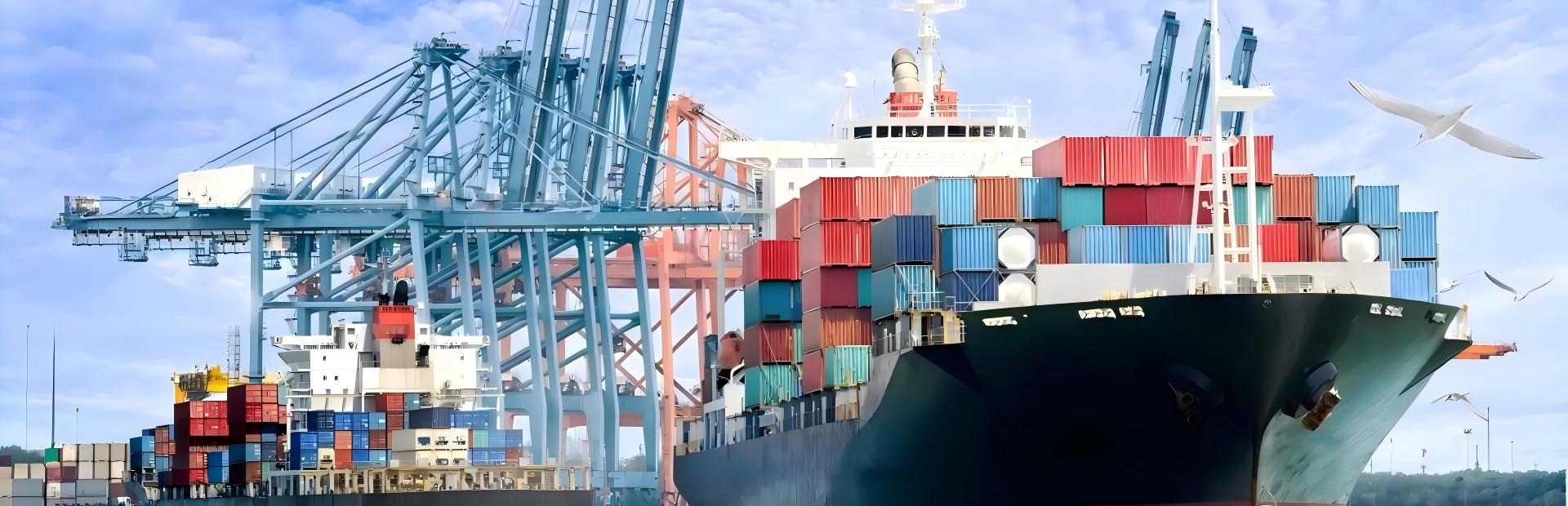
Cross-border logistics in 2026 is under pressure from slower trade growth, route disruption, customs change, and tighter delivery expectations. The World Trade Organization said global merchandise trade grew 4.6% in 2025, but its March 2026 outlook expects growth to slow to 1.9% in 2026 under the baseline scenario. At the same time, UN Trade and Development notes that maritime shipping carries over 80% of world trade and remains exposed to fragile growth, rising costs, and geopolitical risk.
One of the biggest challenges this year is unstable transit planning. Sea-Intelligence reported global schedule reliability at 62.8% in December 2025, with average late-vessel delay at 5.04 days, and then 62.4% at the start of 2026. UN Trade and Development also said Red Sea disruption is expected to continue through 2026, while early May 2025 Suez Canal ship tonnage transit levels remained about 70% below the 2023 average. For exporters, that means cross-border logistics is no longer just about booking space. It is about choosing routes that protect production timing, delivery commitment, and total landed cost.
The second challenge is customs and policy uncertainty. In the United States, the suspension of duty-free de minimis treatment for low-value shipments has been continued in 2026, and CBP states that shipments once entering under the under-800-dollar threshold may now face duties, taxes, and fees. That raises the importance of export market compliance, HS classification accuracy, invoice consistency, and document control. A weak handoff between manufacturer and trader can easily create delays here. A manufacturer usually knows the real material standards used, packing details, and quality control checkpoints. A trader may handle communication well, but if shipment data does not match factory reality, customs risk increases.
A third challenge is the way logistics now connects directly with the OEM and ODM process. Buyers placing bulk orders need more than freight booking. They need early support on carton dimensions, pallet patterns, loading plans, warehouse consolidation, and shipping mode selection. This is where a project sourcing checklist matters. The manufacturing process overview, final inspection record, packaging specification, and compliance file should all be aligned before cargo reaches the port. When these steps are handled too late, the result is often higher storage cost, split shipment risk, and missed launch windows.
Air cargo also reflects this pressure. IATA reported that full-year air cargo demand in 2025 rose 3.4%, while capacity rose 3.7%, and February 2026 demand was already up 11.2% year on year. This tells us that urgent replenishment and time-sensitive cargo remain active, even while the wider trade environment is more cautious. The challenge is balancing speed and cost without damaging supply chain stability.
| Challenge in 2026 | What exporters need to do |
|---|---|
| Route disruption | Build flexible sea and air plans |
| Customs rule change | Strengthen compliance documents |
| OEM and ODM complexity | Align logistics with production earlier |
| Bulk supply pressure | Improve consolidation and loading design |
| Delivery uncertainty | Use clearer milestone tracking |
In this environment, WANHAO’s strengths are practical and relevant. Its official service profile highlights sea freight, air freight, warehouse consolidation, customs clearance, domestic transportation, and DDP door-to-door shipping to the United States. Its USA routes also cover FCL and LCL solutions for different shipment sizes. That matters because the biggest challenge in cross-border logistics this year is not one isolated problem. It is the need to manage production reality, freight execution, and import compliance as one connected process. WANHAO’s model fits that need by helping manufacturers move from factory readiness to final delivery with better coordination, lower clearance risk, and more stable shipping decisions.