
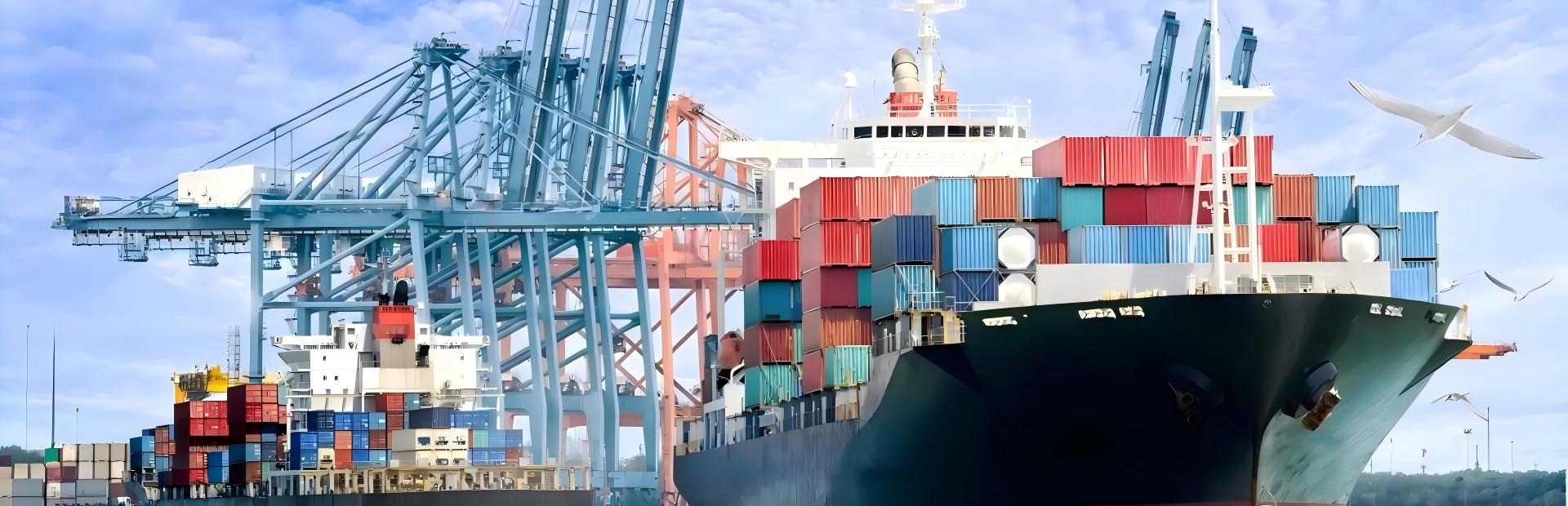
Importers, trading companies, e-commerce sellers, and manufacturers often use ocean freight when shipping larger cargo from China. The main question is usually whether to choose FCL or LCL. A reliable China ocean freight forwarder should not only book vessels, but also help buyers compare cargo volume, sailing schedule, port choice, customs clearance, warehouse consolidation, and final delivery cost.
Industry research estimated the ocean freight forwarding market at about USD 75.4 billion in 2023 and expected it to reach about USD 108.8 billion by 2032. The data is based on market modelling, industry interviews, and cross-checked logistics trends. FCL accounted for more than 53% of the market in 2023, showing that full container shipping remains important for large-volume cargo and stable supply chains.
| Selection Point | What Buyers Should Check | Shipping Value |
|---|---|---|
| FCL Support | 20GP, 40GP, 40HQ container planning | Fits bulk and regular shipments |
| LCL Support | Shared container space and consolidation | Helps small and mixed orders ship flexibly |
| Port Coverage | Shenzhen, Ningbo, Shanghai, Qingdao, Guangzhou | Matches supplier location and route cost |
| Sailing Schedule | Vessel frequency and transit time | Supports inventory planning |
| Warehouse Consolidation | Multi-supplier receiving and cargo checking | Reduces shipment confusion |
| Customs Clearance | Export documents and destination coordination | Lowers clearance delay risk |
| Cost Control | Ocean freight, local charges, delivery cost | Helps buyers estimate landed cost |
| Cargo Protection | Packing check, palletizing, carton marks | Reduces damage risk |
| DDP Option | Duties, taxes, and final delivery support | Simplifies cross-border shipping |
| Communication Speed | Route updates and problem handling | Improves supply chain response |
FCL is usually better when buyers have enough cargo to use most of a container. It provides stronger cargo control because the container is not shared with other shipments. This can reduce handling, lower damage risk, and make transit planning more predictable.
FCL is suitable for stable bulk orders, wholesale replenishment, large product batches, seasonal stock planning, and factory-to-warehouse shipments. Buyers should confirm container type, loading method, supplier readiness, cargo weight, port schedule, and final delivery address before booking.
LCL is more suitable when the cargo is not large enough for a full container. It allows buyers to ship smaller quantities without waiting for enough goods to fill a container. This is useful for trial orders, mixed suppliers, sample batches, and flexible replenishment.
However, LCL usually involves more warehouse handling and consolidation. Buyers should check carton strength, cargo marks, packaging condition, document accuracy, and delivery schedule carefully. For fragile goods or high-value products, the packing plan should be reviewed before shipment.
WANHAO supports FCL and LCL ocean freight from China, along with warehouse consolidation, export customs clearance, DDP door-to-door shipping, customs coordination, and final delivery. Our team can help buyers choose the right ocean freight plan based on cargo volume, supplier location, budget, delivery deadline, and destination address.
For buyers comparing top China ocean freight forwarders for FCL and LCL shipments, the stronger choice is usually a logistics partner that can provide flexible container options, reliable port coordination, clear cost planning, organized consolidation, and long-term shipping support.