
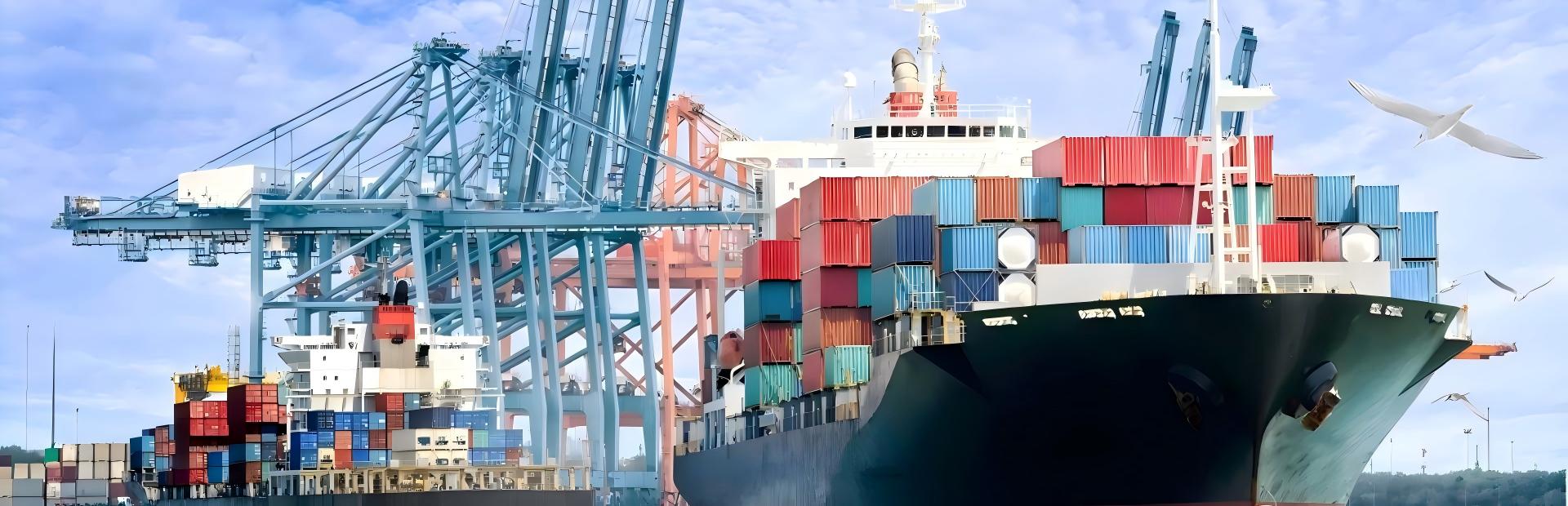
European customs rules affect China shipping by determining import declarations, commodity classification, customs duties, VAT, product compliance, and cargo release requirements for goods entering the European Union.
European customs rules govern how goods entering the European Union (EU) from China are declared, assessed, and released for import. These rules apply whether shipments arrive by sea freight, air freight, rail freight, or road transportation.
For importers, manufacturers, wholesalers, and e-commerce sellers, the main requirements include:
Accurate customs declarations
Correct commodity codes
Proper customs valuation
Applicable customs duties and import VAT
EORI registration where required
Compliance with product-specific regulations
The EU has a common customs framework, but VAT administration, certain national procedures, and domestic delivery arrangements can differ between member states.
For example, shipping goods from China to Germany and shipping goods from China to France generally involve the same core EU customs framework, but the destination country's VAT procedures and local logistics arrangements may differ.
EU customs clearance is the process through which imported goods are declared to customs authorities and assessed before they can be released for free circulation.
The typical process includes several stages.
The Chinese supplier and importer prepare the necessary commercial and transport documents, including:
Commercial invoice
Packing list
Bill of lading or air waybill
Product details and commodity codes
Certificates or permits when required
The importer or an appointed customs representative submits the declaration using the applicable customs procedures.
The declaration includes information about the goods, their value, origin, classification, and relevant import arrangements.
Customs authorities assess applicable charges based on the declared information and the relevant EU and national rules.
Depending on the goods and risk assessment, customs or other competent authorities may request additional documents, inspections, or compliance evidence.
Goods can proceed after the necessary customs requirements have been satisfied.
Incorrect information or missing documents can delay release and create additional storage or handling costs.
Commodity codes determine how goods are classified under the EU customs tariff system.
The correct code affects:
Customs duty rates
Trade measures
Import restrictions
Statistical reporting
Certain product-specific requirements
Classification depends on the product's materials, function, construction, and intended use.
For example, two products that appear similar may fall under different commodity codes because they use different materials or perform different functions.
Importers should verify classifications through the EU's TARIC database and seek professional classification advice when necessary.
Official reference: European Commission — TARIC Customs Tariff.
Customs duty depends on several factors, including:
Commodity code
Customs value
Country of origin
Applicable preferential arrangements, if any
Additional trade measures
China-origin goods may be subject to different duty rates depending on their product category. Certain products may also face anti-dumping duties, countervailing duties, or other trade measures.
Importers should not assume that all Chinese products face the same customs duty rate.
Before shipping, businesses should check the current tariff for the exact product classification and country of origin.
Customs value is generally based on the transaction value, subject to the applicable valuation rules and adjustments.
Depending on the circumstances, relevant transportation, insurance, and other costs may need to be included.
Accurate commercial invoices and supporting records help reduce the risk of valuation disputes.
Import VAT is generally payable when goods enter the EU, subject to the applicable rules and any relevant exemptions or special procedures.
VAT rates differ between member states.
For example:
Germany generally applies a standard VAT rate of 19%.
France generally applies a standard VAT rate of 20%.
The Netherlands generally applies a standard VAT rate of 21%.
Reduced rates may apply to certain eligible goods.
Import VAT is generally calculated using a taxable base that includes customs value, applicable customs duties, and certain incidental expenses under the relevant VAT rules.
Businesses should distinguish import VAT from customs duty because they are separate charges.
VAT-registered businesses may be able to recover eligible import VAT, subject to the applicable national rules, documentation, and business use requirements.
The country where goods are imported, the customs procedure used, and the importer's tax status can all affect the final treatment.
Yes. Businesses generally need an Economic Operators Registration and Identification (EORI) number when carrying out customs activities covered by EU EORI requirements.
The EORI number identifies an economic operator in customs procedures.
Before shipping from China, importers should confirm:
Whether an EORI number is required
Whether the number is valid for the relevant customs activity
Which business will act as the importer
Who will submit the customs declaration
Whether a customs representative has been appointed
An EORI number does not replace other import requirements, such as product compliance, VAT registration where required, or import licences.
Businesses should arrange registration before shipment whenever possible to avoid unnecessary administrative delays.
Customs clearance does not automatically mean that goods meet all requirements for sale in the EU.
Imported products must also comply with applicable product safety, environmental, labelling, and sector-specific regulations.
| Product Category | Important Areas To Check |
|---|---|
| Electrical products | Applicable electrical safety and conformity requirements |
| Machinery | Machinery safety and relevant EU product legislation |
| Toys | Toy safety, chemical restrictions, and conformity documentation |
| Chemicals | REACH, CLP, and other applicable controls |
| Batteries | Applicable battery regulations and transport requirements |
| Food products | Food safety and relevant sanitary requirements |
| Medical devices | Applicable EU medical device rules and authorisations |
| Wooden packaging | ISPM 15 requirements where applicable |
The exact obligations depend on the product's characteristics, intended use, and applicable legislation.
For products requiring CE marking, importers should verify that the relevant conformity assessment, technical documentation, declarations, and marking requirements have been fulfilled.
A customs declaration alone does not establish that a product is legally compliant for sale in the EU.
The core customs rules generally apply regardless of whether goods arrive by sea or air. However, transportation operations and timing can differ.
Sea freight is commonly used for:
Bulk commercial cargo
Full container loads
Less than container load shipments
Machinery and furniture
Regular wholesale orders
Longer transit times can provide additional time to prepare documents, verify commodity codes, and coordinate customs clearance before arrival.
However, port handling, container release, and inland delivery may add operational steps.
Air freight is commonly used for:
Urgent orders
Product samples
High-value goods
Time-sensitive components
Because air cargo arrives faster, accurate documentation and advance clearance arrangements are particularly important.
For both methods, product classification, customs valuation, import VAT, and applicable compliance requirements remain essential.
Shipping terms determine how the seller and buyer allocate responsibilities, but they do not override customs law.
Under DDP Incoterms® 2020, the seller is responsible for arranging delivery to the named destination and handling import clearance, applicable duties, and taxes.
Before accepting DDP, the parties should confirm that the proposed importer and customs arrangements are legally workable in the destination country.
Under DAP, the seller arranges transportation to the agreed destination, while the buyer generally handles import clearance and applicable duties and taxes.
DAP may suit businesses with established customs representatives and import procedures.
For either term, the contract should clarify the named destination, included services, payment responsibilities, and how unexpected charges will be managed.
Most preventable delays can be reduced through early preparation.
Importers should:
Confirm the correct commodity code.
Prepare accurate invoices and packing lists.
Verify customs value and country of origin.
Check current duty rates and additional trade measures.
Confirm EORI and customs representation arrangements.
Check product-specific regulations before dispatch.
Clarify who will pay duties and import VAT.
Send documents to the customs representative before cargo arrival.
Confirm whether any additional licences or declarations are required.
For repeat shipments, businesses can establish standard document templates and product classification records to improve consistency.
Several mistakes can increase costs or delay cargo release.
Incorrect classification can result in duty discrepancies or additional customs checks.
Incorrect customs values may trigger requests for supporting evidence or reassessment.
The EU has a common customs framework, but national VAT rates and certain administrative procedures differ.
Goods may face restrictions or additional checks if required product documentation is missing.
DDP allocates contractual responsibilities between the seller and buyer, but it does not override statutory requirements.
A complete cost comparison should include customs duty, import VAT, clearance fees, handling, and final delivery.
Early checks help businesses reduce avoidable problems before goods leave China.
A freight forwarder can coordinate international transportation and help arrange the customs processes needed for China-to-Europe shipments.
Depending on the agreed service, support may include:
Document review and shipment coordination
Commodity code information and customs preparation
Export clearance in China
Coordination with destination customs representatives
Duty and tax payment arrangements
Sea freight and air freight
Door-to-door delivery
Importers should confirm which services the provider performs directly and which are handled by customs representatives or overseas partners.
The importer remains responsible for providing accurate information and meeting the legal obligations applicable to the transaction.
Before cargo leaves China, confirm the following:
Product classification and applicable duty rate
Customs value and country of origin
Commercial invoice and packing list accuracy
EORI and customs declaration arrangements
Import VAT treatment
Product compliance and required certificates
DDP or DAP responsibilities
Destination handling and final delivery costs
These checks help businesses estimate landed costs more accurately and reduce the risk of avoidable customs delays.
European customs rules affect shipping costs, documentation, product compliance, and delivery planning. Our team provides international logistics solutions including sea freight, air freight, cargo consolidation, customs clearance coordination, and door-to-door shipping.
Contact us to discuss your product type, shipment volume, destination country, and delivery requirements.