
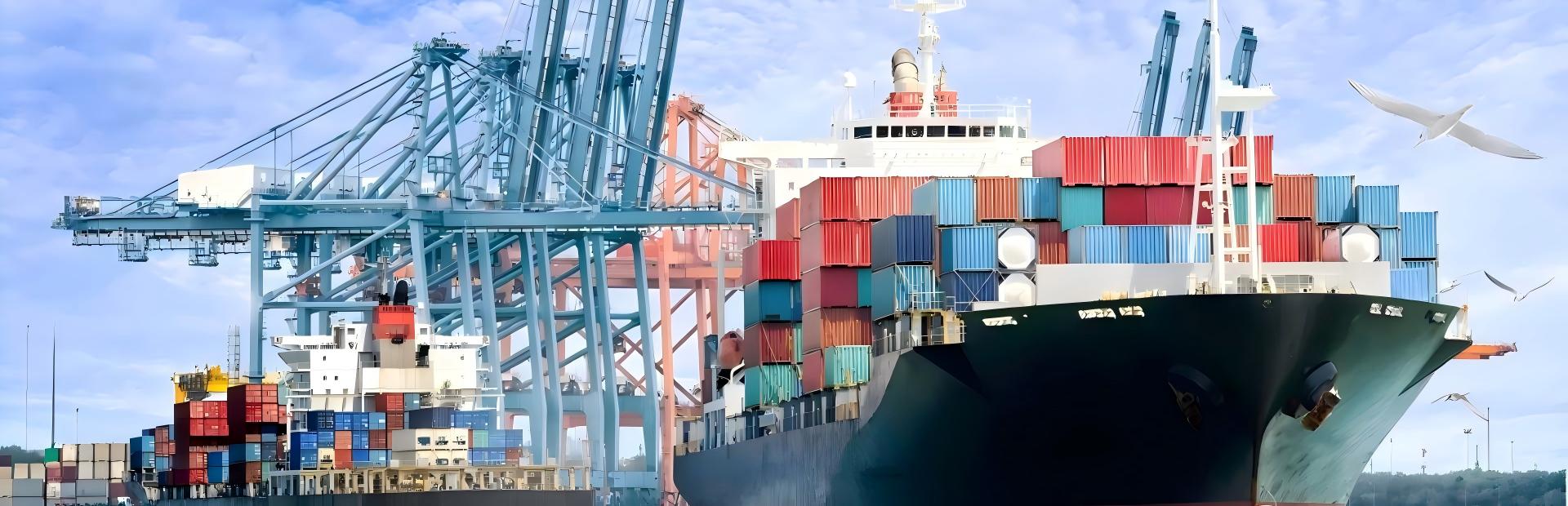
Railway shipping from china to Europe is generally faster than sea freight, while sea freight is usually more economical for large, heavy, or bulky shipments. The better option depends on cargo volume, delivery deadlines, and total logistics costs.
Railway shipping and sea freight are two major transportation options for businesses moving commercial goods from China to Europe. Both support international trade, but they differ in transit time, pricing, cargo capacity, and route flexibility.
Railway shipping transports cargo through international rail networks connecting China with European destinations. It is often considered a middle-ground option between air freight and sea freight.
Sea freight transports cargo by ocean vessels between Chinese and European ports. It is commonly selected for large-volume shipments and businesses prioritizing transportation cost.
The main differences include:
Transit time: Railway shipping is generally faster than sea freight on comparable routes.
Transportation cost: Sea freight is often more economical for large shipments.
Cargo capacity: Ocean vessels accommodate very large volumes, while rail services depend on container availability and route capacity.
Route flexibility: Sea freight offers access to a wide range of port destinations, while railway services depend on available rail corridors and terminals.
Supply chain planning: Railway shipping can help shorten replenishment cycles, while sea freight supports cost-efficient bulk inventory planning.
For importers, the most effective comparison should consider the complete shipment from the Chinese supplier to the final European destination, rather than comparing international transit times alone.
Railway shipping generally offers shorter transit times than sea freight, although actual schedules vary by route, terminal, border procedures, and destination.
| Shipping Method | Indicative International Transit Time | Typical Use |
|---|---|---|
| China-Europe Railway | Around 15–25 days | Commercial cargo requiring a balance of speed and cost |
| Sea Freight | Around 30–45 days | Large-volume and cost-sensitive shipments |
These are broad planning estimates, not guaranteed delivery times. Actual schedules can fall outside these ranges, and the comparison depends on the specific origin, destination, service, and current operating conditions.
Door-to-door delivery also requires time for factory pickup, export clearance, terminal handling, import customs clearance, and final transportation.
Railway services can reduce international transportation time by using established land corridors between China and Europe.
For businesses importing products with predictable demand but relatively short replenishment windows, railway shipping may help reduce the time inventory spends in international transit.
However, rail shipments can still be affected by:
Border inspections
Rail terminal congestion
Customs procedures
Container transfers or gauge changes
Seasonal capacity constraints
Disruptions along the route
Importers should request route-specific schedules before booking instead of assuming every railway shipment will arrive within the same number of days.
Sea freight is generally more economical for large shipments because ocean vessels can carry substantial cargo volumes. Railway shipping often costs more than sea freight but may provide a useful balance between speed and transportation cost.
Sea freight is often suitable for:
Full container shipments
Heavy machinery and equipment
Furniture and bulky products
Large wholesale orders
Regular inventory replenishment
Products with flexible delivery schedules
For businesses importing large quantities of goods, the lower transportation cost per unit can make sea freight the preferred option.
Railway shipping may be worth considering when:
Sea freight transit time is too long.
Air freight exceeds the available logistics budget.
Inventory needs to arrive sooner to support sales.
Production schedules require more frequent replenishment.
Shorter transportation time can reduce stockout risks.
The lowest freight quotation does not always produce the lowest overall business cost. Importers should also evaluate inventory carrying costs, production interruptions, delivery commitments, and the commercial value of receiving goods earlier.
Product characteristics, shipment volume, packaging, and delivery requirements all influence the most suitable transportation method.
| Product Category | Railway Shipping | Sea Freight |
|---|---|---|
| Industrial components | Suitable when faster replenishment is needed | Suitable for planned bulk orders |
| Machinery and equipment | Depends on dimensions, weight, and route capability | Often suitable for heavy or oversized cargo |
| Furniture | Suitable for eligible containerized cargo | Often economical for bulky shipments |
| Consumer goods | Useful for time-sensitive inventory | Suitable for large wholesale volumes |
| Automotive parts | Useful for selected time-sensitive shipments | Suitable for regular bulk replenishment |
| Textiles and garments | Useful when delivery schedules are tighter | Suitable for larger planned orders |
| E-commerce inventory | May suit selected replenishment plans | Often suitable for bulk stock |
| Dangerous goods | Subject to route-specific acceptance and restrictions | Subject to applicable maritime and cargo regulations |
These are general guidelines rather than universal rules. Some products may be unsuitable for particular railway services because of dangerous goods restrictions, dimensions, temperature requirements, or route limitations.
Before booking, importers should provide accurate product descriptions, dimensions, weight, packaging details, and any special handling requirements.
Both railway shipping and sea freight can accommodate containerized cargo, but the available services, capacity, and operating arrangements differ.
Full Container Load (FCL) railway shipping uses a dedicated container for a shipment, subject to the service arrangement.
It may suit businesses that need:
A dedicated container for their cargo
Faster transportation than comparable sea routes
Predictable shipment planning
Commercial shipments with sufficient volume
Railway FCL availability, container types, loading limits, and destination options depend on the selected route and operator.
Sea freight FCL uses a dedicated ocean container for one shipment.
It is commonly selected for:
Large production orders
Heavy cargo
Bulk inventory
Regular container shipments
Cost-sensitive transportation
Sea freight FCL can offer strong cost efficiency for high-volume shipments, especially when the cargo fills a substantial proportion of the container.
The better option depends on container utilization, route availability, transit time, and the total cost of getting the goods to their destination.
Yes. Smaller shipments can use railway shipping or sea freight through consolidation services, depending on the route and provider.
Less than Container Load (LCL) railway shipping allows compatible shipments from different customers to share container space.
It may suit businesses that:
Import smaller quantities from China
Need an alternative to air freight
Want shorter transit times than some sea freight options
Are testing new products in European markets
Availability and pricing depend on consolidation schedules, cargo dimensions, and the origin and destination terminals.
Sea freight LCL also allows different shipments to share container space.
It is commonly used for smaller commercial orders that do not justify a full container.
However, consolidation and deconsolidation can add handling time and charges. For small shipments, importers should compare the complete LCL quotation with railway LCL and air freight before deciding.
Railway shipping and sea freight are both subject to applicable customs requirements when goods enter the European Union. The transportation method changes the operational process, but it does not remove the importer's customs obligations.
Common requirements include:
Accurate commercial invoices
Packing lists
Correct commodity codes
Customs valuation information
Country-of-origin details
EORI information where required
Product-specific certificates or permits when applicable
Railway shipments may pass through several transit countries before reaching their European destination.
Depending on the route and customs arrangement, transit declarations, border procedures, and terminal coordination may be required.
Importers should confirm where the goods will be cleared for import and which party is responsible for the customs declaration.
Sea freight shipments typically involve port handling and import clearance arrangements at the relevant destination or designated customs location.
The importer or appointed customs representative must ensure the required documents and declarations are prepared.
For both methods, incorrect commodity codes, incomplete documents, or missing product compliance information can delay cargo release.
Total landed cost includes more than the international transportation rate. Importers should evaluate all charges incurred before the goods are available for use or sale.
Typical cost components include:
Factory pickup
Export handling
International transportation
Cargo insurance, where applicable
Terminal handling
Customs clearance
Customs duty
Import VAT
Inland transportation
Warehousing and additional handling
Railway shipping costs depend on factors such as:
Origin and destination terminals
Container type and cargo volume
Route availability
Terminal handling
Inland transportation
Customs and transit arrangements
A railway quotation should clearly identify whether transportation to the final destination is included or whether additional trucking and handling charges apply.
Sea freight costs depend on:
Container size and utilization
FCL or LCL service
Origin and destination ports
Carrier schedules
Port handling
Inland delivery
Seasonal capacity and market conditions
A low ocean freight rate may not represent the lowest door-to-door cost if destination charges, consolidation, or inland transportation are substantial.
The most useful comparison is between quotations covering the same cargo, route, delivery point, customs services, and service conditions.
Neither transportation method is universally more reliable. Reliability depends on the route, carrier or operator, service schedule, customs arrangements, and the quality of shipment coordination.
Railway shipping may provide a shorter scheduled transit time on suitable routes, but it can be affected by border procedures, terminal capacity, and disruptions along the corridor.
Sea freight offers extensive global port connectivity and substantial cargo capacity, but schedules can be affected by port congestion, vessel delays, weather, and changes to shipping services.
Businesses should evaluate reliability through:
Route-specific schedule information
Frequency of available departures
Historical transit performance where available
Shipment tracking and communication
Contingency arrangements
Destination handling capability
For time-sensitive orders, it is also important to allow a reasonable buffer between the estimated arrival date and the required delivery date.
Railway shipping is worth considering when a business needs a balance between transportation speed and cost.
It may be suitable for:
Commercial shipments that cannot wait for a longer ocean transit
Industrial components required for planned production
Consumer goods with moderate replenishment deadlines
Selected automotive or machinery-related cargo
Businesses seeking an alternative to air freight for eligible shipments
Railway shipping is not automatically the best choice for every shipment. Route availability, cargo restrictions, container requirements, and destination delivery costs must be checked first.
Sea freight is often the preferred option when transportation cost and cargo capacity are the main priorities.
It is especially suitable for:
Large wholesale orders
Full container shipments
Heavy or bulky products
Planned factory production orders
Regular inventory replenishment
Businesses with flexible delivery schedules
For companies with reliable demand forecasts, sea freight can support lower transportation costs per unit and more economical bulk purchasing.
The key is to plan orders early enough to accommodate the longer transportation cycle.
Yes. Using both transportation methods can help businesses balance cost, speed, and inventory availability.
For example, a company may ship most of its regular inventory by sea freight while using railway shipping for selected products that require earlier replenishment.
A combined strategy may help businesses:
Reduce average transportation costs
Maintain inventory availability
Respond to changing demand
Support production schedules
Reduce dependence on a single transportation method
The most suitable mix depends on sales forecasts, supplier lead times, cargo characteristics, and the financial impact of delayed delivery.
For businesses importing multiple product categories, transportation decisions can be made shipment by shipment rather than applying the same method to every order.
Before booking, importers should evaluate six factors.
Determine when the goods must arrive at the final destination, including customs clearance and inland transportation.
Check whether the shipment is suitable for FCL, LCL, or another available service.
Compare international freight, origin and destination charges, customs services, and final delivery.
Confirm whether the goods are accepted on the selected route and whether special handling or documentation is required.
Check the actual origin and destination terminals, departure schedules, and onward transportation arrangements.
Consider the cost of holding inventory, the risk of stockouts, and the consequences of a delayed delivery.
A reliable decision should reflect the full supply chain rather than relying on transit time or freight rate alone.
A professional freight forwarder helps coordinate supplier pickup, export documentation, international transportation, customs procedures, and destination delivery.
For businesses shipping from China to Europe, useful capabilities include:
Railway and sea freight arrangements
FCL and LCL shipping coordination
Cargo consolidation
Export documentation support
Customs clearance coordination
Door-to-door delivery
Transparent quotations and shipment updates
The right logistics partner should explain the differences between railway shipping and sea freight based on the actual cargo, destination, delivery deadline, and budget.
Our team provides international logistics solutions including China-Europe railway shipping, sea freight, air freight, cargo consolidation, customs clearance coordination, and door-to-door delivery.
Shipping arrangements can be tailored to cargo volume, product type, destination, and delivery requirements.
Contact us to discuss your China-to-Europe shipment and receive a logistics plan suited to your business.
Previous:
Next: What Documents Are Required For Germany Imports From China?